Rug pads are great because they prevent slippage, prolong wear, protect the floor underneath, and provide additional comfort and quiet. That being said, most of our rugs do not actually require a pad underneath. Many, like those from the Andes, crafted with sheep wool and cotton, are durable and sturdy enough to be placed directly on the floor. But for enhanced protection and longevity, a rug pad is always a welcome addition.
Area rugs are a design-friendly way to absorb sound and insulate a room. They are a wonderful way to reduce noise, as footsteps on a rug are more muted than on hardwood floors or tile, and they also dull ambient sounds. Additionally, they provide warmth and a general sense of well-being. Who doesnt love a good area rug!
Most area rugs are easy to maintain with a few simple steps. For small stains and spills, you can spot clean with warm, soapy water. Never rub the affected area, always blot! You should vacuum your rugs to remove dirt and debris. And to ensure that rugs wear evenly, it is recommended to place a pad beneath them, and rotate them regularly. As with most vibrant works of art, direct sunlight may dull the colors. For more substantive cleaning, it is recommended that you dry clean your area rug.
Were huge fans of eco-friendly everything! When it comes to area rugs, you can look for certain indicators that it is produced in a sustainable way that reduces our carbon footprint. Some artisans, like a handful of weavers from India, use recycled fabrics: cotton, rayon, and polyester. Others stress the use of natural dyes and ethically-sourced wool. (Wool is particularly celebrated for being recyclable, abundant, and naturally stain-resistant.)
Handmade, or footmade! Many of the weavers who produce area rugs use a pedal, or foot, loom. While they technically have the assistance of a machine--a treadle or handloom--its operation requires the dexterity, strength, coordination, and patience of the artisan. Additionally, most area rugs are finished by hand.
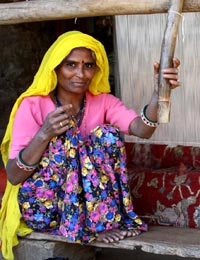
Traditional area rugs are mostly woven on looms. Treadle, or foot, looms make use of pedals to lift and lower the looms harness. This raises the threads of the warp, so that the weft can pass through the opening in the threads. This type of loom is common in the Andes, Central America, as well as Mexico, and traces back to Mayan weavers in the period after the Spanish arrived. Elsewhere, such as India, handlooms are still used. The designs are mapped out in advance, and it takes about four to five days to complete a dhurrie, or traditional Indian floor covering. While the work to craft each of these rugs may be labor intensive, the beauty of the finished product makes it well worth the wait.
While area rugs are handcrafted by artisans from all over the world, they share certain features in spite of their vastly different regions. From the Andes to Central America, Mexico to India, most artisans use some combination of sheep wool, cotton, and natural and industrial dyes. Some artisans, like those from India, may incorporate other materials, like jute, or recycled cotton, polyester, and rayon, into their works. Some of the Zapotec weavers in Mexico use dyes made from natural materials like walnut shell, cochineal, and flowers. With these materials, artisans create vibrant colors and authentic patterns, ideal for adding dimension and warmth to any home.
āEvery great story has a humble beginning, this one is no different; before you take your second step, you must take your first.ā
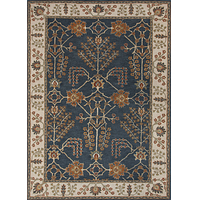
The intricate patterns in these classic rugs show the vast skill of the weavers of JRF Collective. Traditional styling and timeless motifs will anchor... read more
The Summer Catalog
Discover our unique collection of beautiful, handmade objects from around the world, inspired by more than a century of exploration.
Every NOVICA order comes with our universal guarantee
Expertly packed for safe delivery
Quality tested and verified by our region teams
Fair trade and 100% happiness guaranteed
Your support makes a real difference to the lives of artisans.
Ernestina Asante
West Africa
Although carving has long been regarded as the preserve of men, Ernestina has been able to make her own mark on the industry, carving her own masks and djembe drums.
Through her sales with NOVICA, Ernestina has grown as an entrepreneur, expanding her business and taking on apprentices. She even persuaded her husband who was a taxi driver to quit his job and join NOVICA as a carver.
Every purchase supports NOVICA's mission to spread happiness by celebrating exploration, empowering artists, and preserving global culture. Our Mission

“Happiness requires something to do, something to love and something to hope for.” ~ Swahili Proverb
People and Planet First Verified Social Enterprise